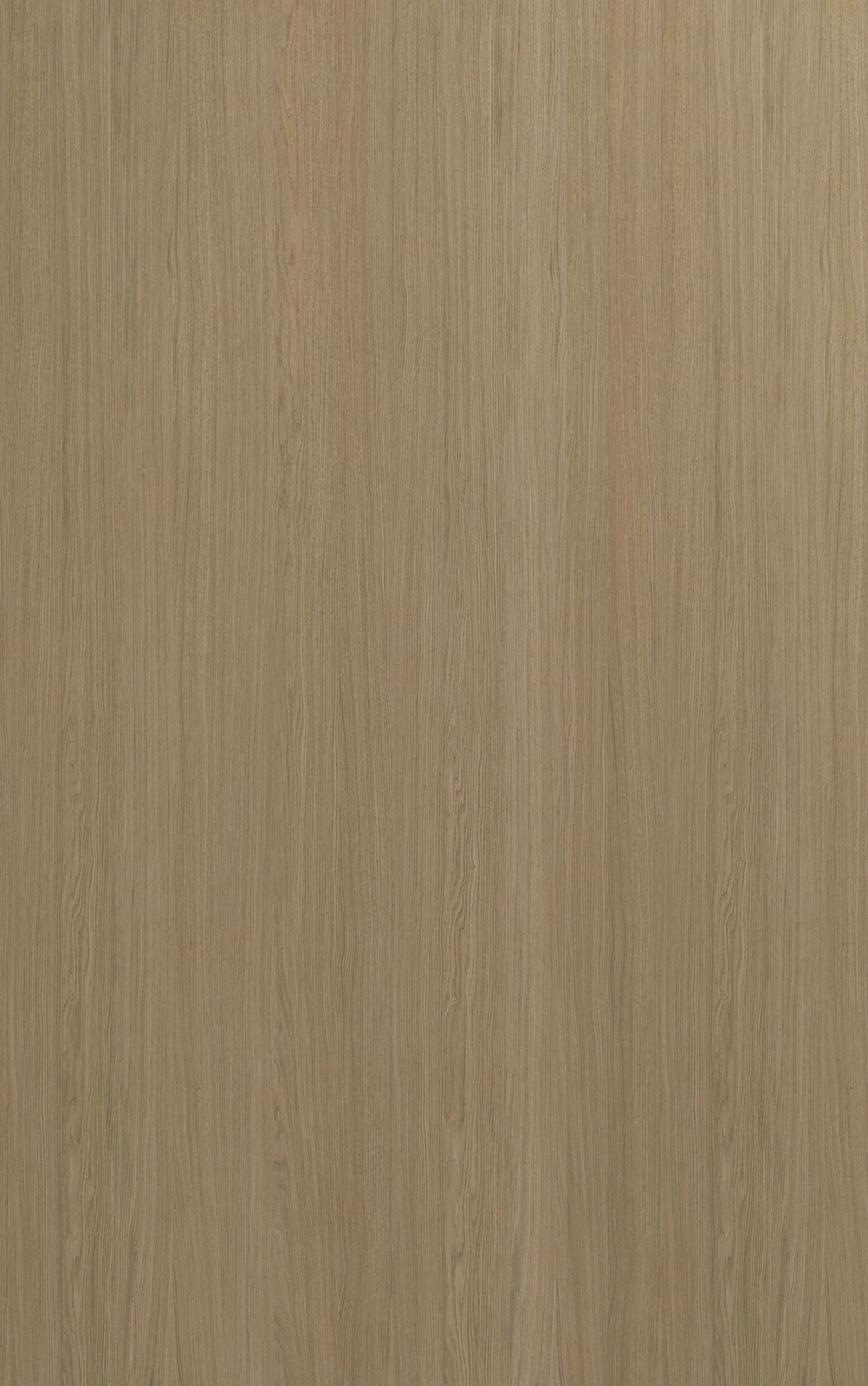
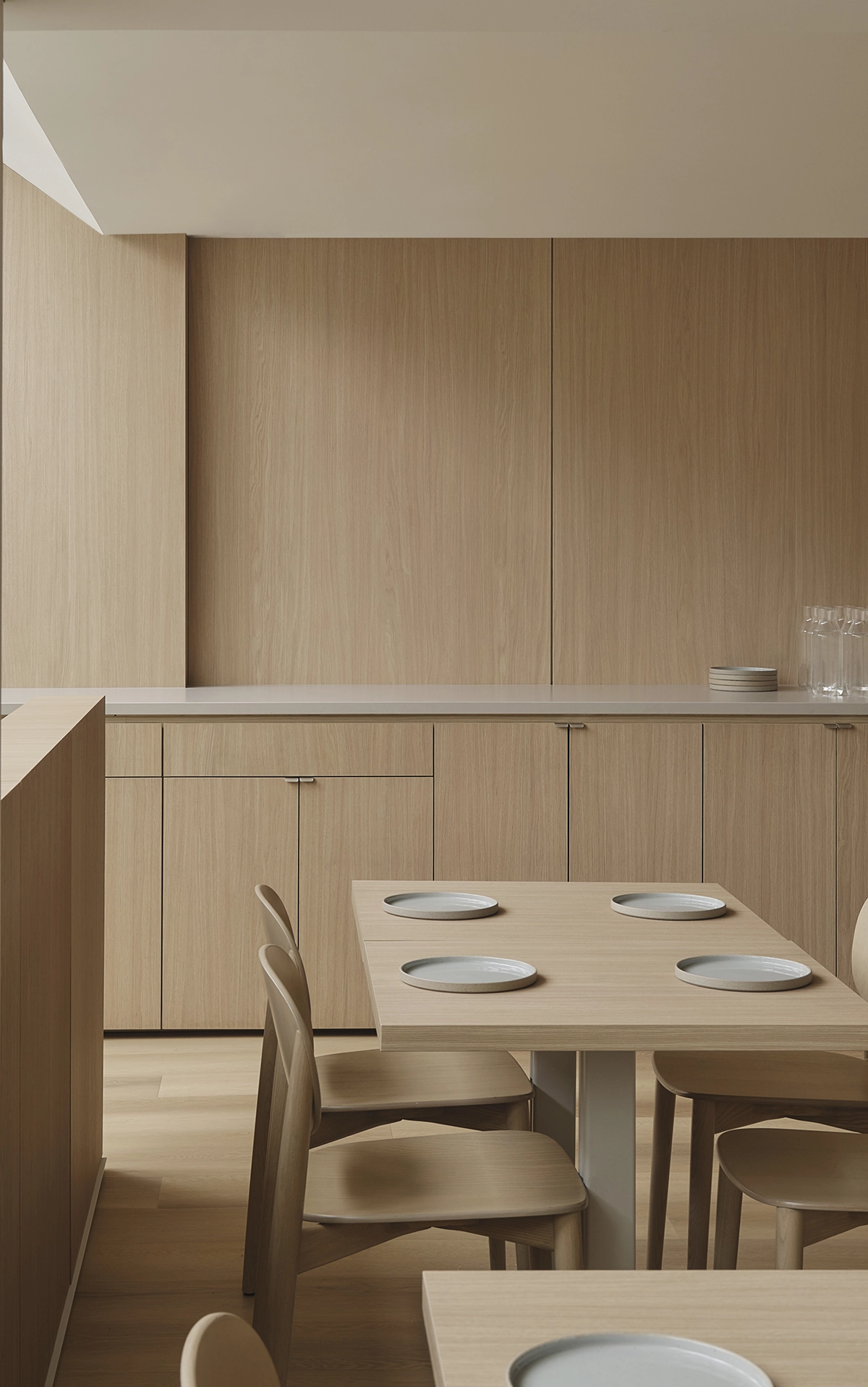
Explore our suite of timeless colours across limitless wooden applications.
Browse Now
.webp)


HPL, or High-Pressure Laminate, is a robust surface material designed for interiors that demand exceptional durability. Commonly specified across commercial, hospitality, education, and healthcare environments in New Zealand and Australia, HPL is chosen when surfaces need to withstand heavy use – and keep their composure while doing so.
Where other materials prioritise efficiency or visual restraint, HPL steps in when performance is non-negotiable.
HPL (High-Pressure Laminate) is manufactured by layering multiple sheets of kraft paper, impregnated with phenolic resins, beneath a decorative surface paper treated with melamine resin.
These layers are bonded together under very high heat and pressure to create a dense, stable laminate sheet. The finished HPL sheet is then bonded to a substrate – such as MDF, particleboard, or plywood – during fabrication.
You’ll often see it specified as HPL panels, high-pressure laminate sheets, or simply laminate in architectural documentation.
The high-pressure manufacturing process is what sets HPL apart.
By compressing multiple resin-saturated layers into a single sheet, HPL achieves:
This makes HPL particularly suited to demanding interior environments where surfaces are subject to frequent contact, cleaning, and wear.
HPL is engineered for resilience.
HPL performs strongly in high-traffic areas and resists scratching, impact, and abrasion.
More resistant to heat and moisture than TFL or melamine, HPL is often specified where conditions are less forgiving.
The non-porous surface supports frequent cleaning, making HPL suitable for healthcare, hospitality, and education settings.
Available in a wide range of colours, textures, and finishes — from solid colours to refined timber looks.
.webp)
Across New Zealand and Australia, HPL is commonly used for:
HPL is often selected where contact, impact, and cleaning are part of daily life.
Each surface material serves a distinct purpose.
Thick, multi-layered, and extremely durable. Best for high-impact, high-traffic, or moisture-exposed surfaces.
Integrated surface and substrate, efficient and consistent. Ideal for large joinery runs and controlled interior environments.
Thin decorative surface bonded to a substrate. Cost-effective and reliable for furniture, cabinetry, and general joinery.
In many interiors, HPL is used selectively – reinforcing key surfaces – while TFL or melamine provide consistency across larger areas.
HPL products specified in New Zealand and Australia must comply with strict formaldehyde emission standards, including E0 or E1 classifications.
When sourced from reputable manufacturers, HPL is suitable for commercial, public, and residential interiors, including sensitive environments.
HPL is unapologetically functional.
Its role is not to soften a space, but to protect it – to hold up under pressure without compromising the overall design intent. Used thoughtfully, HPL allows interiors to perform at a high level while maintaining visual coherence.
At VidaSpace, HPL is specified where strength, hygiene, and longevity are essential – supporting interiors that need to work hard, every day.
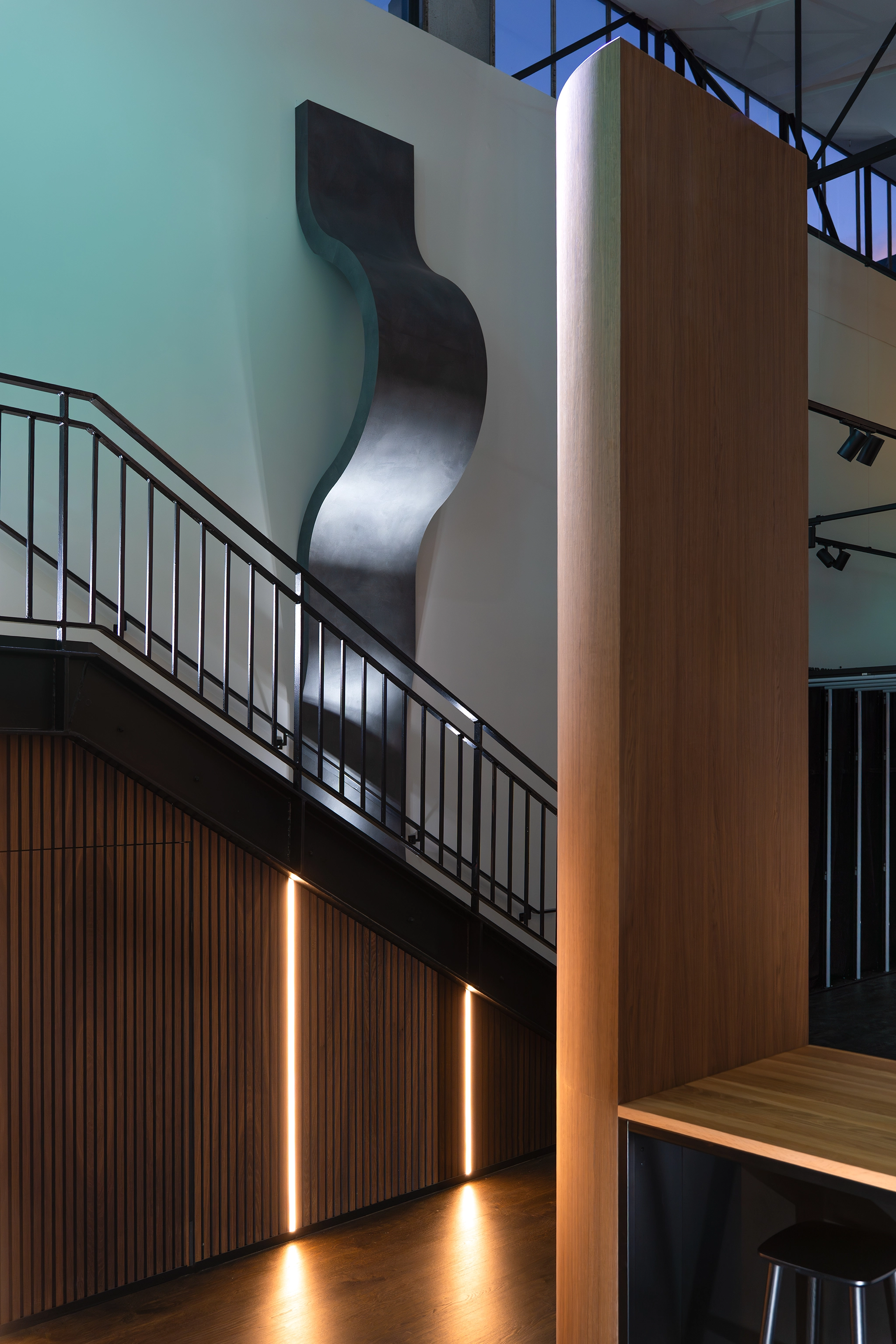
Originally published by HOME Magazine. VidaSpace is defined by a certain restlessness, a refusal to be confined by what has come before. With the launch of ALT, that mindset finds its clearest expression yet.
Read More.webp)
At VidaSpace, ambitious design and innovation have always been central to who we are. Standing still has never really suited us, progress is part of our DNA. So, when it came to launching ALT™ by VidaSpace, we knew we wanted to do something BIG.
Read MoreElevate your interior with VidaSpace. Contact us and one of our team of trained interior designers will be able to guide you through the process.